
News

No jab, no job?

Over here, we’re asking a three-question, 100% anonymous survey on the topic of mandatory vaccinations. We need your opinion on the issue of compulsory vaccinations, but please, read on first…


Mandatory Vaccinations in the workplace. It’s a complex and vexed issue, but with less shifting of priorities amongst eligible vaccination groups, more access to vaccines etc., the timeline towards all businesses confronting this issue is getting shorter. As much as we’d love to keep the borders closed and stay healthy forever, the need to open up to the mainland and a few selected international routes is an economic prerequisite. Continuing a trade-before-aid theme, we can’t rely on government stimulus forever.  It does, however, make the eventual likelihood of a Delta incursion more probable. 

Against that, we can’t have an economy without public Health, and seemingly, we cant have public Health without elevated vaccination rates. It’s that simple. Mainland hospitals are full of COVID cases, the majority of which are unvaccinated. Hence, as Tasmania pushes through the 50% double vaccinated score, something else will likely be needed to move us toward the 70/80/90% we need to open up. I suspect that impetus will come from the private sector, as always; and the questions around ‘no jab, no job’ will become more persistent.

This week, two important milestones have been achieved in the fight against a Delta variant getting loose In Tassie. Yesterday, we passed through 50% of the eligible population having been double-vaccinated and earlier in the week, it became possible for anyone aged 12 or over to access a COVID-19 vaccination. With vaccine supply issues now seemingly ‘sorted’, the nation’s drive toward an 80% double vaccination rate seems suddenly more achievable. Mainland leaders’ mindset is moving from “suppression” to “living with it”, evidenced by some small restorations of personal freedoms in parts of the mainland for those who’re double vaccinated. 

Hopefully, at some point, COVID will be relegated to the same level of concern the flu gets every year. It won’t shutter businesses, alter family celebrations, or be the fuel behind angst-ridden neighbourly disputes. Someday. But for now, as we continue the climb toward Tasmania’s aspirational 90% double vaccination requirement to open the borders, we need to recognise that the Tasmanian experience has been different. Lauded as one of the safest places to be on the planet, our lives have been comparatively more straightforward than our mainland and overseas friends, especially this past winter with the ravages of the Delta variant. We’ve absolutely had fallout from decreased mainland visitation, but we’ve not had community infection now for over a year. By contrast, the eastern mainland states have been in very real, very personal lockdowns for months.  That simple fact changes everything, especially how we approach the question of mandatory vaccination.

As employers, how do we feel about imposing a mandatory vaccination requirement in the workplace? Do we even have the ability to do that? And if we do, how would we ensure it gets adhered to? The Tasmanian government has already mandated that health care workers and aged care workers must be vaccinated to enter the workplace. The list of affected roles is surprisingly large โ€“ details here. But what about in a private setting? A setting where it’s the business owner’s capital on the line, with a need to simultaneously keep the doors open, balance employee & community health, compliance requirements, and all the moral & ethical issues, while seeking to be a good employer?

Following a National Cabinet meeting on 6th August 2021, Prime Minister Morrison confirmed Australia’s policy remained that vaccines (including COVID-19 vaccines) should be voluntary and free and that in the absence of specific public health orders, an employer can only mandate that an employee be vaccinated through a lawful and reasonable direction. The Prime Minister said that ultimately employers need to consider these issues and make their own decisions appropriate to their workplace.

That’s not especially helpfulโ€ฆ

OK, What do the legal-eagles have to say on the matter? Does an employer actually have the legal capability to compel an employee to get vaccinated in order to continue employment? An article by Sydney law firm Coors has considered it and come to the conclusion that the legal hurdles are not insurmountable, but encouragement is ultimately better than coercion. It’s a lengthy read, but it explains some of the legal reasons as to why employers might be able to take a ‘No jab, no job’ approach. 

Has anybody tried it yet? 

Yes. SPC (Shepparton) will be the first Australian company to mandate COVID-19 vaccinations for staff and visitors by November 2021. Along with some other food processing companies, Qantas, Google, Facebook and Deakin University are also considering mandatory vaccinations. SPC employees have spoken of being “steam rolled” and the younger staff voiced concerns they were ineligible for Pfizer but as of this week, that much is no longer the case. 

Companies such as Wesfarmers, NAB and Commonwealth Bank of Australia are considering carrots rather than sticks to encourage vaccinations, and some mainland tech firms are providing paid leave to employees who receive the jab.

So, there’s precedent, but only amongst some very large businesses. For small to medium businesses, it’s a little more vexed.

What to do next?

  1. Initially, a review of Worksafe Tasmania’s page on the topic here is worth a read. It concludes that for most Tasmanian businesses, mandatory vaccination won’t be a requirement, but note that as at today, the page hasn’t been updated since March 2021 which was back in ‘pre-Delta’ times.  As has been oft-quoted in media , “..Delta changes everything..” 
  2. Consider a risk management and mitigation approach, emphasising positive and facilitative messaging and decision-making, rather than negative, coercive messaging and employer ultimatums. This might include:
    1. genuine worker consultation. Encouraging and then considering employee input (possibly adjusting the phasing or the timing of mandatory vaccination), may result in greater uptake of voluntary vaccinations, or less resistance to mandated policies once introduced.
    2. early announcement of your vaccination policies (including offering vaccination leave and other leave in the event adverse side effects are suffered);
    3. utilising relevant resources to disseminate accurate up-to-date information; and 
    4. other financial and non-financial incentive offerings to staff. 
  3. Also consider the position of vulnerable employees before imposing any blanket policies which may unintentionally breach federal or state privacy, discrimination or human rights laws. Employees with disabilities or medical conditions, pregnant employees and visa holders, may have difficulty readily accessing vaccinations even if they are eligible. Even if (eventual) vaccine mandates become lawful, facilitative measures are more likely to be more effective initially. 

As you can appreciate, itโ€™s a complex and probably inescapable decision that needs to be contemplated by business owners soon. If youโ€™re seeking advice, we recommend that you contact any of the following Chamber members for advice.

Simmons Wolfhagen

Bishops -Barristers and Solicitors

Rae & Partners

Quartz Consulting

And a reminder: Over here, weโ€™re asking a three-question, 100% anonymous survey on the topic of mandatory vaccinations. We need your opinion on the issue of compulsory vaccinations to inform our policy and advocacy position.

News

Feast your eyes on this…

Earlier this week, Launceston Gastronomy officially launched its bid to join the ranks of UNESCOโ€™s creative cities network โ€“ a collection of 250 Cities globally that have identified creativity as a strategic factor for sustainable urban development. The cities which currently make up this network work together towards a common objective: placing creativity and cultural industries at the heart of their development plans at the local level and cooperating actively at the international level. Unsurprisingly, Launcestonโ€™s bid has its roots in the gastronomic virtues of the region.

Gastronomy: To grow, cook & serve. A philosophy that underpins theย paddock to plate phenomenon that has become so popular worldwide in recent years, but Launcestonโ€™s bid goes beyond that. More โ€˜soil-to-stomachโ€™ or โ€˜grape to glassโ€™; it embodies the whole relationship between food and local culture, the art of growing, preparing and serving food, the cooking styles of our region, and the science of good eating.

This bid is remarkable and worthy of the cityโ€™s support, but not because it helps to connect Northern Tasmania to the world via food, which it does. And not just because it positions Launceston as one of the great regional food cities of the world, which it also does. And not even because it provides a platform for food sustainability in a mixed agricultural and urban context. It does all of that and creates an interplay between local agriculture in our Tamar Valley backyard; agriscience that combines the best of agriculture partnering with a start-up ecosystem of technologists and educators; hospitality that thrives with the abundance of local produce; and destination tourism that underpins a vibrant visitor economy โ€“ all hallmarks of a growing and thriving city. Itโ€™s a lesson in collaboration and focuses some of our most experienced business and community leaders around a shared goal, and thatโ€™s great for our city.

Looking externally, UNESCOโ€™s endorsement of Launceston as a Creative City of Gastronomy will provide entrance to a network of like-minded cities, a hive-mind to solve complex problems around the worldโ€™s many food security issues. Fingers crossed for a favourable outcome! As the world emerges from a post-COVID stupor, the benefits accrue beyond Launceston, and we have a role to play.

News

Why do we have to wait…?

The City of Launcestonโ€™s City Heart 2 project is out for public consultation at the moment, but only until this Friday, so youโ€™ll need to respond quickly if you want to have your say. Thereโ€™s not one bit of it we donโ€™t applaud. It continues the People, Place and Lifestyle masterplan adopted some years ago; and builds on it to deliver a city centre that will be more attractive, more accessible, more walkable, and much more liveable. Itโ€™ll be a City Heart for which Launceston will be famous and will truly contribute to our vision for Launceston to be one of the great regional cities of the world.

Aside from traffic changes, an overt urban greening program is a noticeable feature of City Heart 2. Until this, urban trees and green spaces have been neglected aspects of urban amenity and liveability; yet the best streets in the best cities are usually tree-lined. Trees in cities centres encourage foot traffic, create economic activity, and increase property value. They provide shade, help moderate temperature, and beautify cityscapes by softening the hard edges and hard surfaces. Established street trees are a great asset to any city, so the Chamber is working with the City of Launceston, technical experts at UTAS, and Cityprom to build momentum for a more aspirational program of city greening.ย  We encourage future CBD regeneration projects to invest heavily in street trees in St John St and Cameron St. Street Trees that are appropriate, that donโ€™t cause footpaths to be broken and dangerous and remain green all year round. Can you imagine how wonderful it would be to walk through a green corridor linking City Park to Civic Square and onward to Royal Park. Wouldnโ€™t that be something?

While patience may be a virtue, when it comes to improving our city, itโ€™s not a virtue we possess. Three years is just too long to wait. There are circumstances outside the Councils immediate control, but we urge them to do all things necessary to bring forward the scheduled commencement of the City Heart 2 project.

News

Trending changes: Mental Health in the Workplace

Commissioned by Atlassian Corporation and conducted by PwC Australia, the second annualย Return On Action Reportย shows the extent to which expectations of employers have changed, with 77 per cent saying that businesses should speak up on societal issues, up 10 per cent on last yearโ€™s iteration of the same report. Notably, workers are prioritising their mental health more than ever beforeย with measurable shifts attributed to work/life changes bought on by the pandemic

Mental health first

  • Over 50 percent of employees surveyed say theyโ€™d consider changing jobsย to access remote work opportunities, and even more are willing to forego a promotion to safeguard their mental health.ย Takeaway: To attract and retain suitable employees, access to flexible work arrangements will become normalised.
  • More than 60 percent of workers also want their employers to take action on social and environmental issues like climate change, equality, and poverty.ย Takeaway: These are no longer just societal issues. Employers are increasingly expected to be part of the solution if they hope to attract quality talent.
  • The report shows that โ€˜mental health and wellnessโ€™ has overtaken โ€˜cost of livingโ€™ as the number one concern of employees, whereas it only ranked in fourth place in 2020.ย Takeaway: This change suggests that the majority of workers have shifted from a โ€œlive to workโ€ to a โ€œwork to liveโ€ mindset.

โ€œThe consequences of inaction are very real. Weโ€™re in a global war for talent and employees want change,โ€ Scott Farquhar, co-founder and co-CEO of Atlassian, said. โ€œThere have never been higher expectations on business, and how we respond as leaders is crucial. If this groundswell of support for action is ignored, it will open businesses up to the risk of alienating the emerging workforce.โ€ 

So, given those shifts in perception, what can you/we/us be doing about it as employers? Where do you start? There are a number of local resources available you immediately:

  • For you and your staff:ย https://checkin.org.au/ย  a Free resource from The Mental Health Council of Tasmania. Itโ€™s a wayfinder to help locate and access all sorts of resources to create and support a mentally healthy workplace.
  • Knowing what you donโ€™t know and then closing the gaps is a great place to start also. Head 4 Work is a resource free to Tasmanian registered businesses:ย https://head4work.com.au/
  • If youโ€™re in the Hospitality sector โ€“ checkoutย https://fromexperience.coย a resource created and delivered by Bianca Welsh (Bbhavsc)ย from Stillwater and Black Cow Bistro, (and of course, Chamber Board member)
News

TEMT: A vision at last

Weโ€™re pleased to see that the Tamar Estuary Management Taskforce (TEMT) vision has been released and are pleased with the initial results. The Chamber has been advocating for some time, a vision that delivers โ€˜triple bottom lineโ€™ value โ€“ economic, community and environmental benefit, and we believe this vision is a great start. The report has collated the science gathered over many years to outline a strategic path to a better, healthier estuary with improved utility, replacing the ad-hoc efforts of years past.ย ย kanamaluka/Tamar River is part of the fabric of Launceston and its inhabitants want to see real action to restore and improve the estuary.

This isย a great opportunity to create a world-class wetland experience that compliments the natural beauty of the Cataract Gorge and the Tamar Island Wetlands.ย Please click here to see the vision.

The question now will be how best to deliver that vision? 

The question contemplates TEMTโ€™s ability to bring it to fruition. Likely (hopefully?) to be funded under the City Deal second stage weโ€™ll be advocating to ensure that an appropriately resourced authority is established that builds on TEMTโ€™s vision and to contract and legislate for its achievement.  The Federal and State Governments now need to commit to this plan and ensure funding is consistent and sustained so that work can be undertaken strategically.

News

Launceston – where all the cool kids are coming

You may have heard us say it beforeโ€ฆ the Chamberโ€™s view is that Launceston will inevitably take its place as a Great Regional City of the World. A superior place to work, live, play & invest.

Well, it seems weโ€™re not the only onesโ€ฆ While the mainland grapples yet again with COVID lockdowns and closures, Tasmaniaโ€™s perception as a safe haven continues to rise and Launceston made it into the top 5 of the Regional Movers Index, a document created and maintained by the Regional Australia Institute. (Full report here). It measures population outflows from capital cities to the regions and vice versa. In it, Launceston recorded the highest quarter on quarter growth of any of the surveyed cities โ€“ showing a nett increase in the March โ€™21 Quarter of 88%. Year on Year growth is a more moderate 34% but still a very significant figure.ย 

As a relative newcomer, I can attest to the fact that Launcestonโ€™s allure is a unique mix of heritage and forward-looking entrepreneurism served up with a healthy dose of self-assured confidence. A city where thereโ€™s opportunity, you can get things done; and with none of the congestion, agro and hassles of big-city living. Scratch the surface and thereโ€™s a LOT more going on than you first imagined. No wonder our numbers are upโ€ฆ

The attraction of skilled migration to Northern Tasmania has been a bugbear for some time. This new information seems to suggest that the problem is morphing, but where are we going to put these people? Property prices are rising sharply in response to increased demand, and chamber members in the property management field, report long lists of quality and eager tenants seeking, yet unable to secure appropriate accommodation.ย  Building approvals are up, yet access to new land releases is becoming more difficult. Finding trades is a challenge โ€“ their order books are full. Add in access to materials stymied by supply-chain issues and you get build costs escalating quickly; all of which is becoming a disincentive to investment.ย  Weโ€™ll be taking all this up with the Premier in the coming week.

News

Well Done, Launceston!

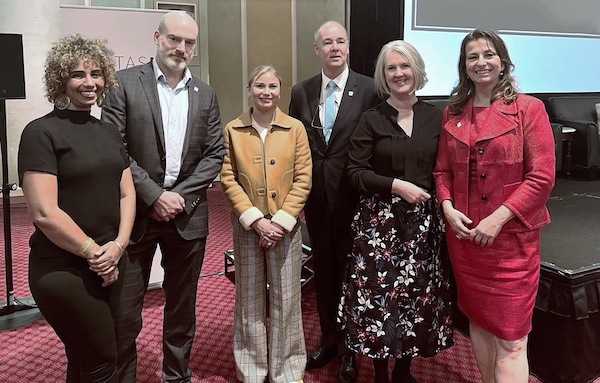
Well done, Launceston! You managed to fill the biggest breakfast event of the year this morning in a showcase event โ€˜Breakfast with Graceโ€™. Co-hosted by the Chamber with TasICT, the event was sold out at 270 guests in just 72 hrs a few weeks back, dwarfing the Hobart running of the same event. 

The 2021 Australian of the year, Tasmaniaโ€™s Grace Tame was the drawcard and did not disappoint. In a frank and quite candid interview, Grace was unguarded but also quite upbeat in recounting of her previous struggles with sexual abuse. She had an amazing cut-through with the audience. Her messaging resonated deeply,ย  and the audience rose to give her a standing ovation. As I looked around the room, there were more than few teary eyes.

Thank you Grace for coming to town; your strength and resilience were inspiring.

News

The Business of Health

The Chamber maintains a number of standing sub-committees that pull together some of the regionโ€™s best people around specific topics, to examine areas for improvement, and identify paths to success. One such committee is the Community & Health Industry Committee (CHIC) where we examine the โ€˜businessโ€™ of the health & allied Industries. Iโ€™m pleased to be able to say that the committee includes the CEOs of many of the major health providers across the north. Typically the health industry does not imagine itself as a business; so CHICโ€™s role is to look at the health & allied industries sector through a business lens, borrowing on lessons learnt in other sectors. Topics under the microscope include skilled staff attraction, supply-chain mapping, just to name a few.

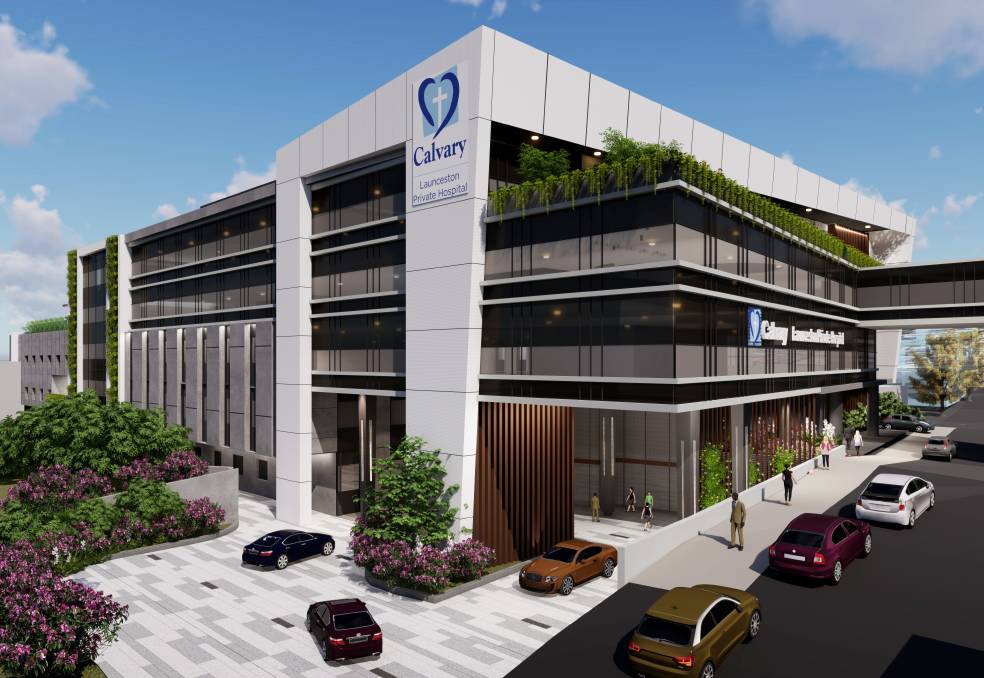
For as long as anyone can remember, CHIC and others have been advocating for the co-location of the Launceston Calvary (Private) Hospital with LGH. Wherever co-locations have happened elsewhere, the outcomes have been unrelentingly positive. So yesterdayโ€™s announcement that the Tasmanian Government has completed an MoU with Calvary (as promised during the recent election cycle); has paved the way for a $120M co-located hospital with LGH with land in Frankland Street allocated to the project under the MoU.ย  Obviously, thereโ€™s a long way to go, but this is great news all โ€˜round.

An artist's impression of the co-located Hospital.
An artist’s impression of the co-located Hospital. Image courtesy of The Examiner
  • It adds to the pile of construction and infrastructure builds in the North that will keep the construction industry in work for years to come. That creates demand for apprenticeship schemes, which filters down into school -> employment pathways. Estimates are (aggregate) 1400 jobs in construction from this project.
  • It creates demand and positions for Health & Allied workers; one of the hardest sectors to recruit for; especially by creating new roles for specialists across a variety of health disciplines. That gives rise to Population Attraction schemes where we will seek to attract and retain skilled professionals to the region, which in turn adds to economic activity in the North.
  • It allows load-balancing between Public & Private health patients which ideally frees up public beds for those patients unable to access the private system
  • It offers the opportunity to cooperate on critical services. Areas such as the public ED, radiology and intensive care benefit from co-location, by improving the economy of scale, funding, and ultimately the overall number of specialist doctors and nurses available.
  • All of which creates better health outcomes for Launceston and the North.

Note: The announcement comes on the heels of the LGH masterplan which was released for public commentary. You can have your say here : https://www.health.tas.gov.au/about_the_department/infrastructure_services

1 2 3 4 5
Privacy Settings
We use cookies to enhance your experience while using our website. If you are using our Services via a browser you can restrict, block or remove cookies through your web browser settings. We also use content and scripts from third parties that may use tracking technologies. You can selectively provide your consent below to allow such third party embeds. For complete information about the cookies we use, data we collect and how we process them, please check our Privacy Policy
Youtube
Consent to display content from - Youtube
Vimeo
Consent to display content from - Vimeo
Google Maps
Consent to display content from - Google
Spotify
Consent to display content from - Spotify
Sound Cloud
Consent to display content from - Sound